What Is a Conversion-First Website (And Why Your Business Needs One)






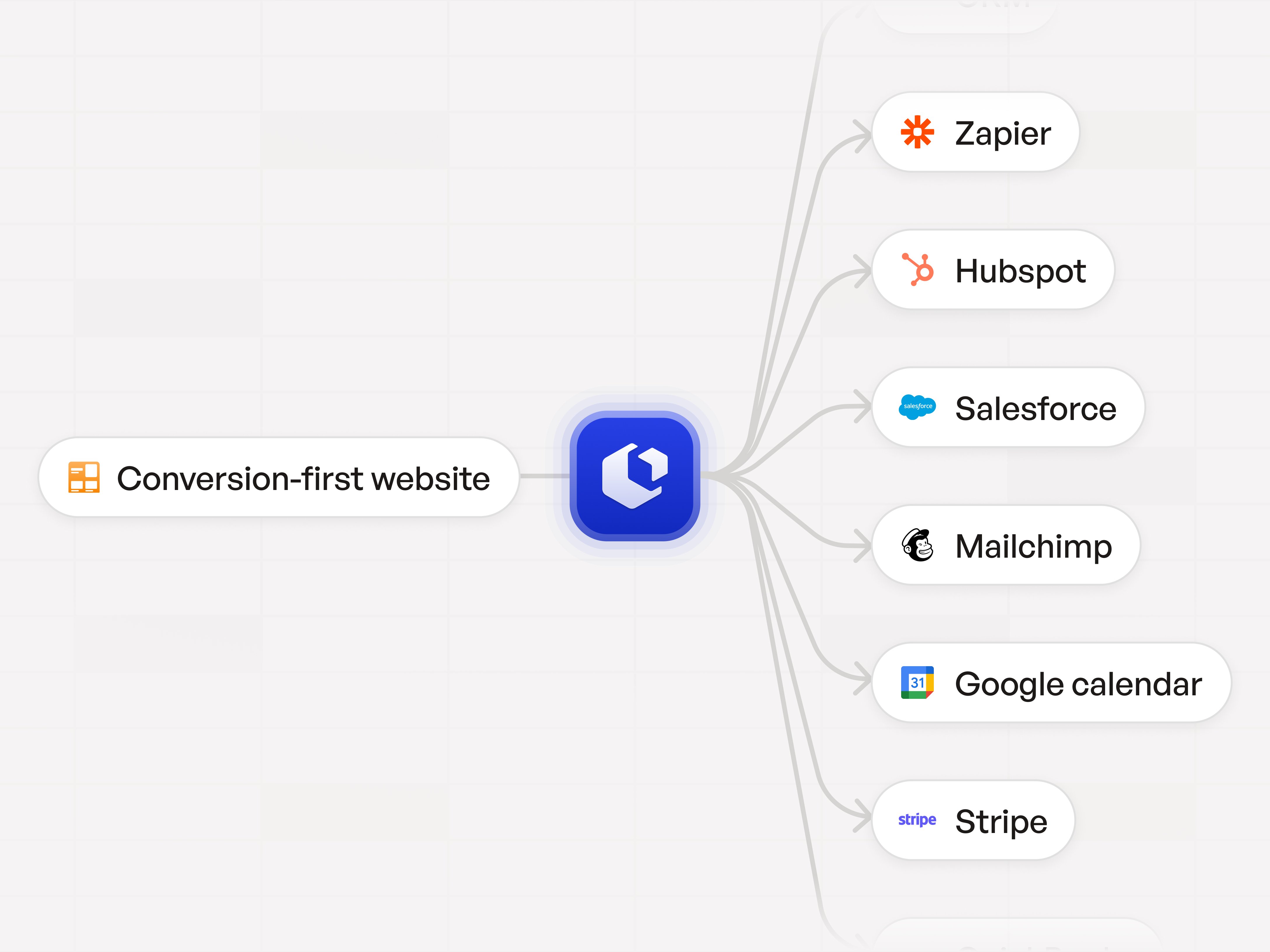

A conversion-first website is built to do the work your team does manually: configure options, show pricing, qualify leads, and capture clean data. Unlike traditional websites that look good but sit idle, a conversion-first website actively moves visitors toward a decision. It handles the 'what will this cost?' questions, filters out tire-kickers, and sends structured information to your CRM or booking tools without copy-paste or follow-up emails.
For founders selling services or products with variable pricing, a conversion-first website replaces hours of manual quoting with automated flows that work while you sleep, meet with clients, or take an actual weekend off.
A conversion-first website prioritizes one thing: moving visitors from 'interested' to 'qualified lead' or 'paying customer' without requiring your direct involvement.
Most business websites are designed to inform. They explain what you do, show some photos, list your services, and include a contact form. That's it. The rest happens manually: you answer emails, send quotes, schedule calls, and explain pricing over and over.
A conversion-first website does that work for you. Visitors configure their own options. They see pricing based on their selections. They qualify themselves by answering the questions you'd ask anyway. By the time they contact you, they understand what's possible, what it costs, and whether they're a fit.
The difference isn't just efficiency. It's the quality of leads. Visitors who go through a structured flow arrive educated and serious. They've already made decisions. They're ready to move forward, not just gathering facts.
A conversion-first website isn't just a prettier version of what you have. It takes over specific jobs that currently eat your week.
Let visitors configure products or services themselves. Options, add-ons, locations, variants—all visible and selectable. Pricing updates based on those choices, including complex rules like zones, demand-based pricing, travel distances, and tiers. The result: visitors answer 'what will this cost?' without sending you an email.
Turn those configurations into clear quotes automatically. Visitors get a price range or instant quote without waiting on a human. All the details you need—specs, timings, locations—get captured in a single, structured flow. No back-and-forth. No 3-day turnaround on quotes.
Use the site to educate visitors on what's possible, typical costs, and trade-offs. Ask smart questions so only serious, good-fit leads reach your team. Filter out tire-kickers and fact-finders before they hit your inbox. Your sales team stops spending hours educating and pricing for people who never buy.
Push structured data—choices, specs, locations, prices—directly into your CRM, calendar, invoicing, or ops tools. No manual copy-paste. No re-entering information into another system. No mistakes from transcription errors. The data arrives where you need it, formatted correctly.
See what visitors are configuring, where they drop off, and which requests turn into real business. Use that insight to tweak questions, options, and pricing rules yourself—without going back to a developer. A conversion-first website isn't set-and-forget. It's a system that gets smarter as you learn what works.
If you sell something with a fixed price—say, a $29 subscription or a $199 product—a traditional website works fine. Add to cart, check out, done.
But if your answer to 'what does it cost?' is 'it depends,' you have a problem. Traditional websites can't handle that conversation. They show a contact form and push everything to you.
Here's what happens: A visitor lands on your site. They're interested. They want to know what a pool installation, a solar system, a photography package, or a smart home setup would cost for their situation. Your website can't tell them. So they fill out a contact form with minimal information. You get a vague inquiry. You email back asking questions. They respond a day later. You send a quote. They go silent. Meanwhile, you've spent 45 minutes on someone who was never serious.
Multiply that by 20-50 inquiries a week. That's your week gone.
A conversion-first website handles that entire conversation. The visitor configures their options, sees pricing, understands trade-offs, and either moves forward as a qualified lead or exits because they're not ready. Either outcome saves you time.
The easiest way to understand conversion-first design is to compare what most websites do versus what they could do.
| Lazy Website | Conversion-First Website |
|---|---|
| Shows services in a list | Lets visitors configure options and see pricing |
| Contact form captures name and email | Structured flow captures specs, preferences, budget, and timeline |
| You manually create and send quotes | Quotes generate automatically based on selections |
| Every inquiry requires manual follow-up | Only qualified leads reach your inbox |
| You copy-paste data into your CRM | Data flows directly into your systems |
| No visibility into what visitors want | Analytics show what's converting and where drop-offs happen |
| Looks good, does nothing | Works as your hardest-working employee |
A lazy website is a brochure. A conversion-first website is a sales rep that never sleeps, never forgets to follow up, and never quotes the wrong price.
Conversion-first design applies across industries. Here's how it works in different contexts.
A pool builder's website lets visitors select pool type (in-ground, plunge, swim spa), dimensions, materials, and add-ons like heating or lighting. The site calculates an estimate based on local installation costs and site conditions. Visitors see a price range before submitting their contact info. The builder receives leads that include complete project specs, not just 'I want a pool.'
Result: One pool company using this approach saw 50%+ year-on-year growth while reducing time spent on unqualified leads.
A smart home company's site walks visitors through a configuration: number of rooms, types of systems (lighting, audio, security, climate), level of automation desired. Complex pricing rules—including zone-based installation costs and equipment tiers—calculate automatically. The customer gets a detailed quote instantly. The integrator's team reviews pre-qualified projects instead of answering basic pricing questions.
Result: 97% reduction in quoting costs. Proposals that used to take hours now generate in minutes.
A photographer's site asks visitors what type of shoot they need (wedding, corporate, product, portrait), the date, location, and specific requirements. Pricing adjusts for travel distance, session length, and deliverables. The photographer gets booking requests with complete details. More importantly, they can turn off their phone during shoots knowing leads are being captured and qualified automatically.
Result: The founder regained evenings and weekends. No more anxiety about missing leads while doing the actual work.
A mobile coffee catering company's site lets event planners configure their order: number of guests, event type, drink menu, equipment needs, and service duration. The site handles complex pricing for staffing, travel, and equipment, then routes the request to the appropriate calendar and generates an invoice-ready quote.
Result: 40+ hours per week regained from manual quoting and back-and-forth emails.
Answer these questions honestly:
If you answered 'no' to most of these, your website is lazy. It looks fine, but it's not doing the work. You are.
A conversion-first website changes every 'no' to 'yes.' That's what it means to have a site that works for you instead of the other way around.
You now understand what separates a lazy website from a conversion-first website. The question is: what kind do you have?
Here's your action step: Look at your current website through the lens of the five jobs. Can visitors configure options and see pricing? Can they qualify themselves? Does data flow into your systems automatically? Do you have visibility into what's working?
For each 'no,' you've found a place where you're doing work your website should handle.
Start with the biggest time sink. If manual quoting eats your week, that's where a conversion-first approach pays off first. If unqualified leads clog your pipeline, focus there. Build the flow that solves your most painful problem, then expand.
Your website should be your hardest-working employee. If it's not, you now know what to build instead.
Frequently asked questions answered