








What you'll learn
- What is solar lead generation?
- How do you generate your own solar leads?
- Step 1: How do you add a solar quote calculator to your website?
- Step 2: How do you automate solar lead follow-up?
- Step 3: How do you drive traffic to your solar calculator?
The best way to generate solar leads is to stop buying them and build your own funnel instead. You add an interactive quote calculator to your site, automate the follow-up, then drive traffic to it. This guide is for solar installers and solar companies tired of paying for shared lists their competitors also bought. You want a system that captures qualified solar leads 24/7.
Buying leads feels quick. But you are usually paying for the same names as three other installers, then racing them to the phone. Owning your solar lead gen flips that. You capture exclusive leads directly, qualify them before sales ever calls, and stop renting your pipeline from a third party.
Here is how to build it.
Key Takeaways
-
Solar lead gen works best when you own the funnel, not when you rent leads from a list broker.
-
Step one is an interactive quote calculator that gives visitors instant answers and captures their details.
-
Step two automates follow-up with email sequences, so no lead goes cold.
-
Step three drives traffic with paid ads, content, local search, and referrals.
-
One European installer, Eltex, used this exact setup to reach about 30 qualified leads a day.
What is solar lead generation?
Solar lead generation is the process of attracting people who want solar, capturing their details, and qualifying them before a sales conversation. A solar lead is simply a potential customer who has shown interest in solar or renewable energy, photovoltaic panels, inverters, battery storage, or a quote. Most homeowners want rooftop PV panels, not the concentrated solar power (CSP) systems used in large utility plants.
Leads come in two types: shared and exclusive. Shared leads are sold to several installers at once, so you compete to close the same person. Exclusive solar leads go to one company only, which means a far better chance of winning the job. When you build your own funnel, every lead is exclusive by default.
The goal is not just more leads. It is qualified solar leads: homeowners with a suitable roof, a real electricity bill to cut, and the intent to act. Quality beats volume every time.
How do you generate your own solar leads?
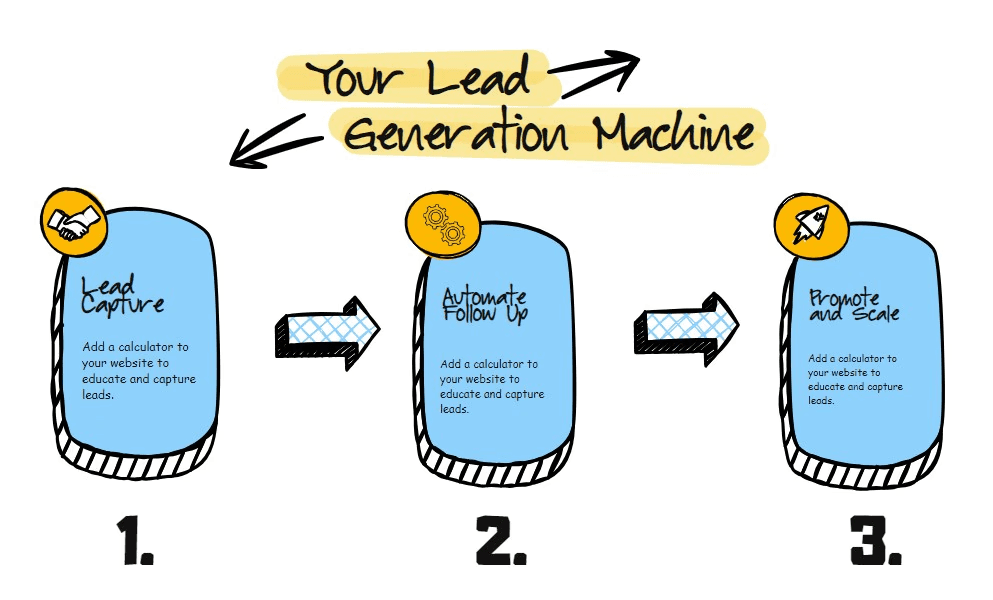
You generate your own solar leads in three steps: capture, automate, and promote. First you add an instant quote calculator to capture interest. Then you automate the follow-up so nothing slips. Then you drive traffic so the machine has fuel.
-
Add an instant quote calculator to your website.
-
Automate lead management and follow-up.
-
Promote your calculator to drive traffic.
Each step builds on the last. Let's go through them.
Step 1: How do you add a solar quote calculator to your website?
You add a solar quote calculator by embedding an interactive form that asks a few questions, then returns a personalized estimate. Tools like ConvertCalculator let you build one without code, starting from a solar lead generation funnel template you drop onto any page.
Here is why it works. Visitors land on your site with three questions: what system do I need, what will it cost, and how much will I save? A static page can't answer those. An interactive calculator can. Visitors enter details like roof type, average electricity bill, and energy use, and get an answer tailored to their home, including likely energy production and savings. It also helps them understand the solar technology behind the quote.
While they learn about their potential savings and system size, you capture their contact details. That is the trade: real value for them, a qualified lead for you. You can gate the results behind an email so people only see their estimate after they share contact info, which filters out tire-kickers and keeps lead quality high.
Whether you sell residential or commercial solar, the calculator uses your own pricing, inverter options, and warranty terms. The same photovoltaic system can be priced for different roofs and energy needs, so every visitor gets a relevant number. It becomes both an education tool and a qualification step in one.
Solar Lead Funnel with Google Solar
Step 2: How do you automate solar lead follow-up?
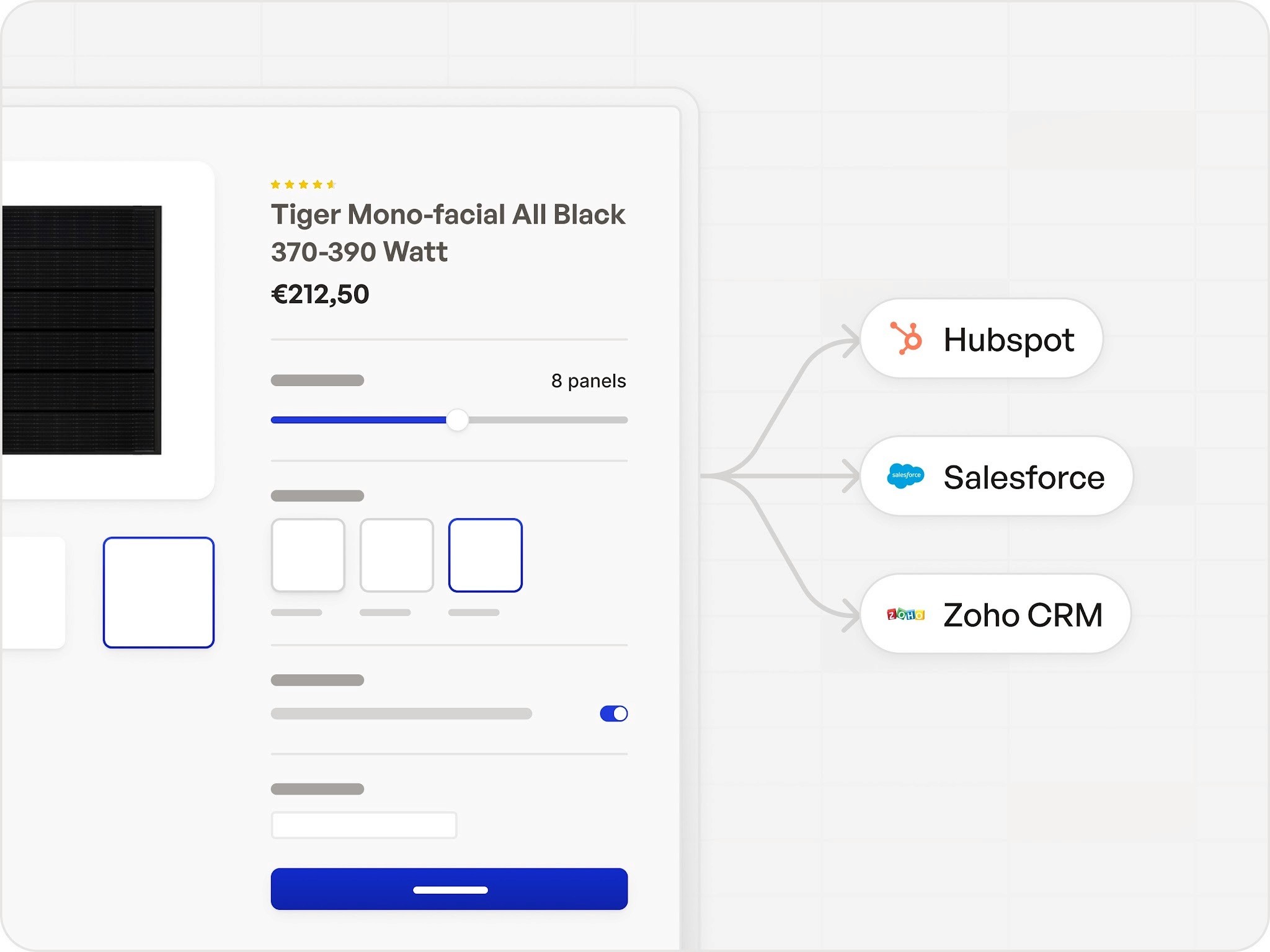
You automate solar lead follow-up by connecting your calculator to your CRM and triggering email sequences the moment someone submits. This is where the system saves you hours and stops leads from going cold.
Connect a CRM. Link your form to HubSpot, Salesforce, or Zoho. Every lead is logged, tagged, and routed to the right person automatically. No copy-paste, no lost names.
Set up email sequences. From the second someone submits, your system can send a timed series: an instant thank-you with their results, an educational follow-up a few days later, then a clear offer like a free consultation. Personalized email marketing keeps prospects warm through a sales cycle that often runs weeks or months.
Score and flag hot leads. Track who opens emails, clicks links, or books a call. When a lead crosses a threshold, your system flags it as hot and alerts sales with the full context: what they viewed, what they want, and what to say. Sales steps in only when the lead is ready, which shortens the sales cycle and lifts conversion rates.
The point is balance. Automation nurtures the slow leads. Your team spends its energy on the ones ready to buy.
Step 3: How do you drive traffic to your solar calculator?
You drive traffic with a mix of paid ads, paid social, content, local search, and referrals. Paid channels bring leads fast. Organic channels bring cheaper leads over time. Most solar companies use both.
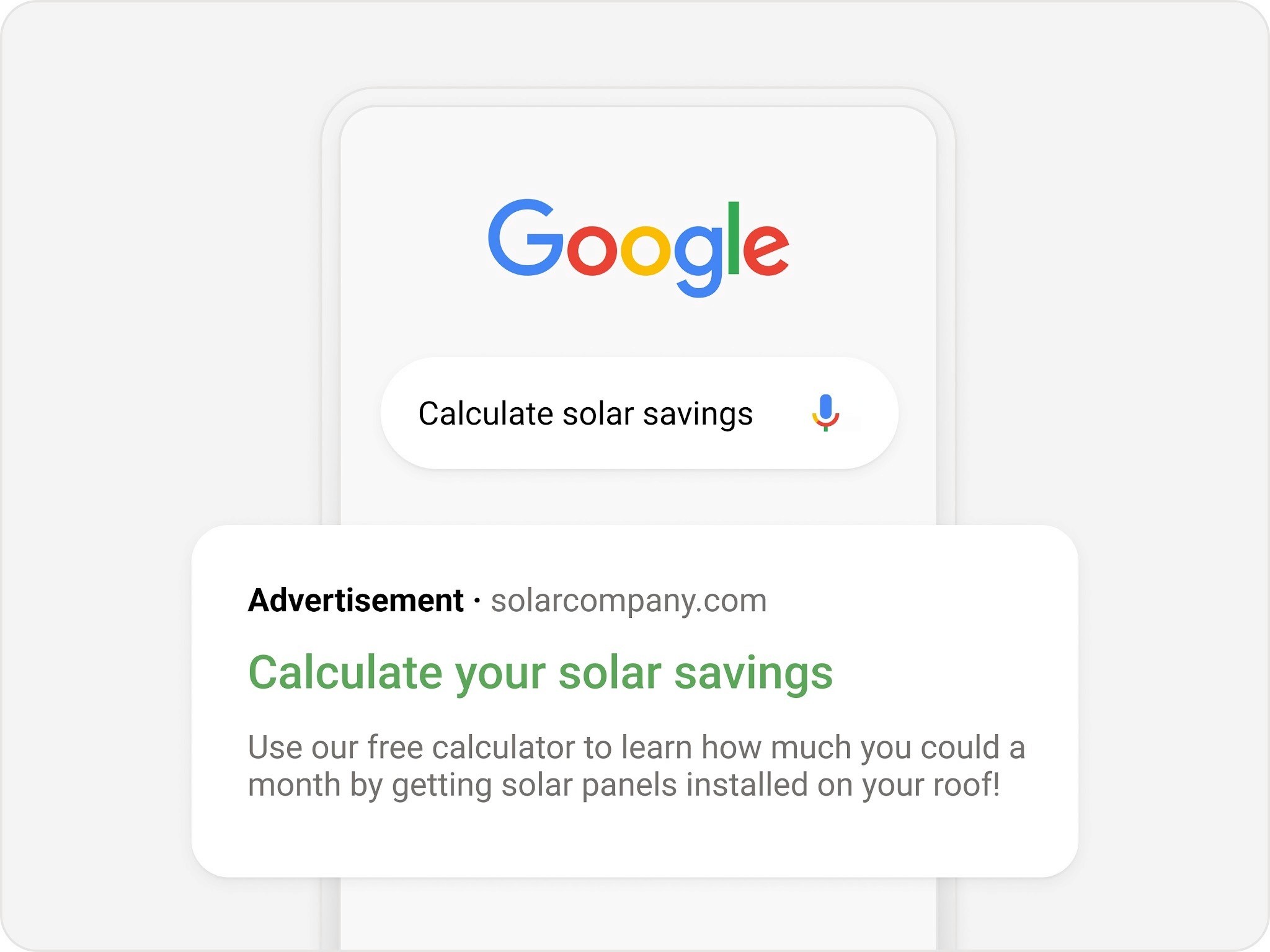
Paid search (PPC). Run Google Ads on terms like "solar panel installation" or "solar quote near me." Paid search puts you in front of high-intent buyers within hours, which makes it the quickest way to test your funnel. Send that paid traffic to a calculator, not a static page. That lifts conversion rates and improves your return on ad spend.
Paid social and retargeting. Run targeted ads on Facebook, Instagram, and LinkedIn to reach people by interest and location. Then retarget visitors who used your calculator but didn't finish, nudging them back to complete the form. A dedicated landing page built around the calculator converts better than a generic homepage, and you can run separate landing pages for different campaigns.
Content marketing and SEO. Helpful content takes 6 to 12 months to pay off, but it produces organic leads that cost far less than paid ones. Write guides on solar savings, net metering, and the Inflation Reduction Act, then link each one to your calculator. Content marketing like this compounds and is the backbone of most solar marketing strategies, and it builds the kind of search authority that keeps producing leads long after you publish.
Local SEO. Optimize for searches like "solar installers near me." Claim your Google Business Profile, gather reviews, and list on platforms like SolarReviews and EnergySage, where buyers compare installers before they choose. Local intent converts because the buyer is already close to a decision.
Referrals. Turn happy customers into a source of leads. A simple referral program with a small reward produces trusted, high-converting introductions at a low cost. Some installers still mix in cold calling, but referrals usually beat it on quality.
Spread across these channels, your marketing efforts keep the calculator fed without leaning on any single source.
Eltex case study: how one solar company reached 30 leads a day
Eltex, a European solar installer, used this exact playbook and watched it overtake their call center. Here are the documented results from their calculator funnel, built on ConvertCalculator.
Eltex was already generating leads through an outbound call center, but their website barely converted. They were spending on paid ads, getting traffic, and watching most of it bounce off static pages. The funnel was the problem, not the traffic.
They replaced the static pages with an interactive solar calculator. It asked structured questions (roof type, electricity bill, warranty length, property age), calculated photovoltaic system size and savings, then gated the personalized results behind a contact form.
The results spoke for themselves:
<table><tbody><tr><th><p dir="ltr"><strong>Metric</strong></p></th><th><p dir="ltr"><strong>Result</strong></p></th></tr><tr><td><p dir="ltr">Qualified leads per day</p></td><td><p dir="ltr">About 30</p></td></tr><tr><td><p dir="ltr">New leads per month</p></td><td><p dir="ltr">Over 1,000</p></td></tr><tr><td><p dir="ltr">Monthly calculator interactions</p></td><td><p dir="ltr">2,000 to 5,000</p></td></tr><tr><td><p dir="ltr">Return on ad spend</p></td><td><p dir="ltr">Improved, which let them scale ad spend</p></td></tr><tr><td><p dir="ltr">Channel performance</p></td><td><p dir="ltr">Online funnel surpassed the call center</p></td></tr></tbody></table>The calculator did more than capture leads. The form data showed Eltex their average system demand, common budget ranges, and add-on interest. That let sales personalize every follow-up. Email-gated results also opened a conversation early, so even slow leads could be nurtured through automated workflows. Digital lead generation became their primary growth engine.
Why are solar leads so expensive?
Solar leads cost more than leads in most industries because the audience is narrow and the buying decision is big. A good lead needs the right roof, homeownership, and the budget or financing to commit, so qualifying takes more effort and more marketing spend.
Competition in the solar industry drives the price up too. Many installers chase the same small pool of buyers, especially in regions with strong incentives like net metering or the Inflation Reduction Act. Typical ranges look like this:
<table><tbody><tr><th><p dir="ltr"><strong>Lead type</strong></p></th><th><p dir="ltr"><strong>Typical price</strong></p></th><th><p dir="ltr"><strong>What you get</strong></p></th></tr><tr><td><p dir="ltr">Shared leads</p></td><td><p dir="ltr">$20 to $50 each</p></td><td><p dir="ltr">Sold to several installers; you compete to close</p></td></tr><tr><td><p dir="ltr">Exclusive solar leads</p></td><td><p dir="ltr">$100 to $300+ each</p></td><td><p dir="ltr">Sold to one company; better odds, higher cost</p></td></tr></tbody></table>When you build your own funnel, your cost per lead drops over time and every lead is exclusive. That is the long-term case for owning your solar lead gen instead of renting it.
Should you buy solar leads or generate your own?
Buy leads for a short-term gap; generate your own for long-term growth. Bought leads give you speed when you are starting out or in a slow month. But you are usually paying for shared names, with no control over quality or the customer experience. If you do buy, here's how to vet solar lead quality before you pay.
Generating your own solar leads gives you exclusive contacts, built-in qualification, and a relationship that starts before sales even calls. The cost per lead falls as your organic leads and referrals grow. For most installers, the smart play is to use bought leads to fill gaps while you build the funnel that eventually replaces them.
Build your own solar lead gen machine
Your solar lead gen machine starts with one calculator. Get that live, connect it to your email tools, then feed it traffic from one channel at a time. Within a few months you have a system that captures qualified leads while you sleep.
You can build your own on ConvertCalculator, starting with a free plan and a ready-made solar calculator template. For the wider view, see how this fits into a full solar sales funnel, or browse more tools built for solar businesses.
Solar Lead Generation Funnel
FAQ
Frequently asked questions answered

Emma Francey
Copywriter @ConvertSite







Use cases
